IoT VPS Hosting with Edge Computing for Connected Devices
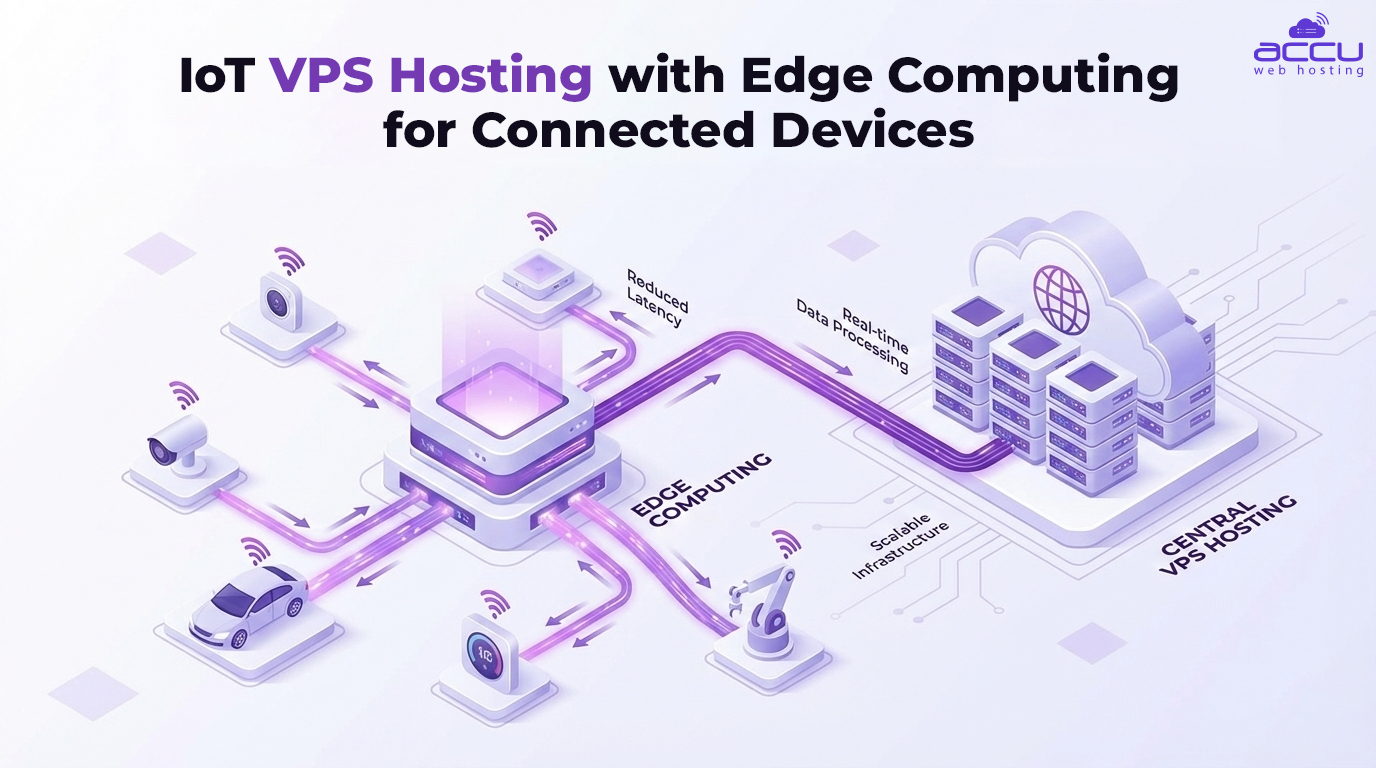
Why Reliable Infrastructure Is Critical for IoT?
IoT delivers value through continuous data flow and real-time decision-making. When that flow breaks, the impact escalates fast. In fact, 68% of IT decision-makers say downtime damages customer trust and brand credibility. Common reliability challenges in IoT include:- Connectivity disruptions that interrupt data flow, leaving operators without visibility into machines, vehicles, or sensor states.
- Resource depletion where exhausted CPU or memory causes device connection failures, timeouts, and data backlogs
- Data loss during transmission, reducing data completeness and timeliness, which makes analytics unreliable.
- Security gaps that expose IoT devices and networks to attacks and system-wide risk.
VPS Architecture Provides Dedicated Resources for IoT Reliability
A Virtual Private Server establishes a computing space with assured resources assigned exclusively to your tasks. In contrast to infrastructure, where performance varies depending on users' actions, a VPS guarantees your IoT platform runs with steady capability.- Dedicated CPU, RAM, and Storage
- Predictable Performance for Always-On Devices
- Stable Connectivity for Continuous Data Flow
- Resource Isolation to Prevent Cascading Failures
- Reliable Data Ingestion and Processing
- Infrastructure-Level Security for IoT Networks
- Seamless Scaling as Device Networks Grow
Introducing Edge Computing: When Local Processing Matters
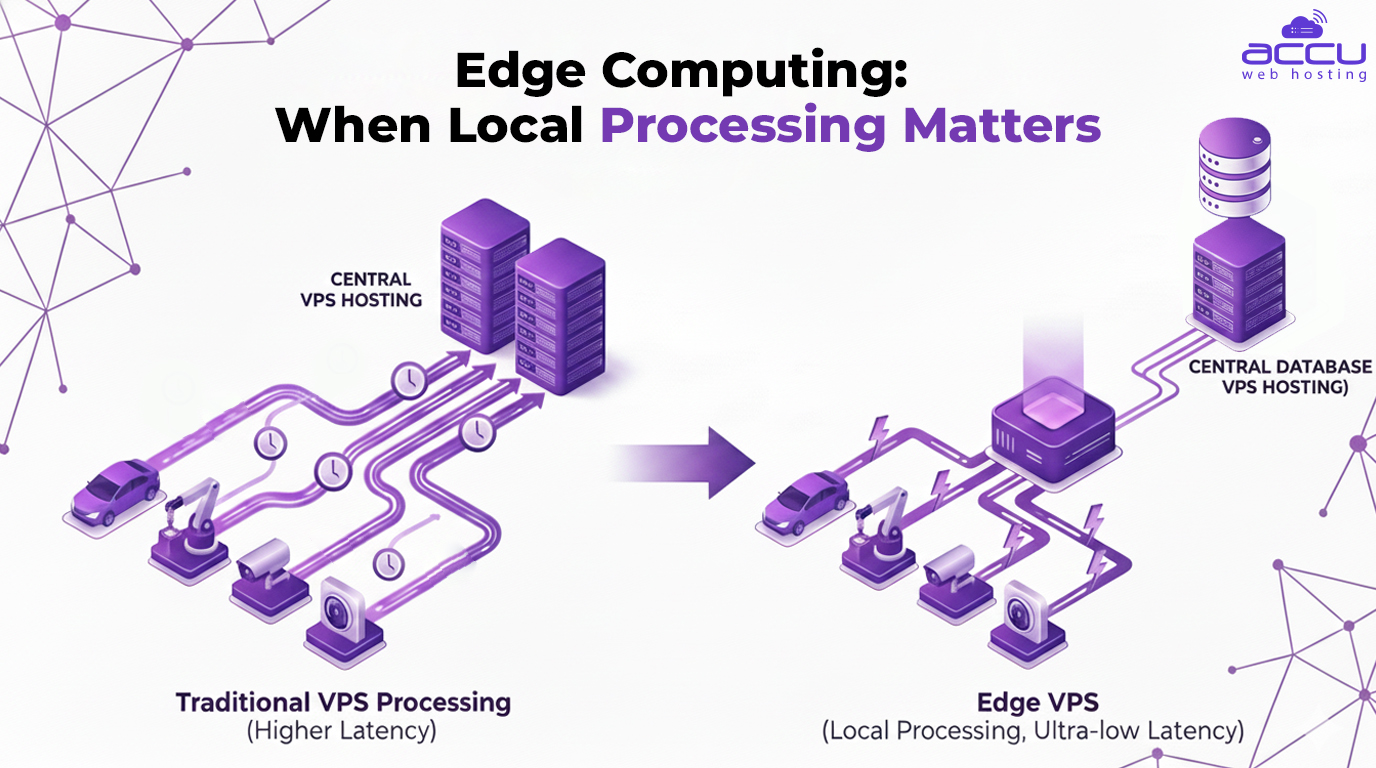
Edge Computing with VPS Infrastructure
Edge computing handles time-critical processing close to devices, while the VPS provides centralized storage, analytics, and system visibility. Low latency Edge devices execute real-time decisions for industrial safety and robotics, sending structured data to the VPS for analysis and records. Bandwidth efficiency High-volume data like video is processed at the edge. Only events and alerts are transmitted to the VPS, keeping bandwidth usage efficient. Data continuity Edge systems collect and sync data with the VPS, maintaining centralized insight and long-term analysis.Predictable Cost Structure
VPS hosting offers pricing determined by assigned resources. CPU cores, RAM, storage and bandwidth. You are billed for the allocated capacity, which stays constant each month. No charges, per device: Regardless of connecting 100 devices or 1,000 devices your hosting expenses stay unchanged.VPS Selection for IoT
When selecting a VPS for IoT workloads, consider:- Server location close to your devices to reduce latency
- Reliable network connectivity with uptime and redundancy
- Dedicated resources for consistent CPU, memory, and storage performance
- Easy scalability as your device network grows
- Automated backups and quick recovery to protect device settings and sensor data
The Future of VPS in IoT
As IoT environments mature, VPS hosting continues to support evolving operational needs. Container technologies such as Docker and Kubernetes are commonly deployed on VPS platforms, enabling flexible service deployment and structured management of multiple IoT components. VPS environments also play a growing role in centralized processing and coordination. They provide a stable layer for handling analytics, orchestration, logging, and device management across distributed IoT systems. AI adoption is increasing as well. While model training typically requires high-performance infrastructure, inference workloads run efficiently on VPS, allowing real-time processing of IoT data streams.Getting Started with VPS for IoT
Begin with a pilot phase: Implement a set of devices to confirm your VPS setup evaluate connectivity behaviors and detect problems prior, to a full-scale rollout. A pilot involving 10 to 50 devices offers insight without the complete complexity. Keep a record of your setup: Note down choices, settings and steps as you create. Such documentation proves essential for problem-solving educating team members and duplicating your configuration. Establish monitoring away: Set up monitoring tools at the start of the installation. Observe resource consumption, device links and app performance from the beginning. Baseline information enables you to recognize patterns and promptly detect irregularities. Build in security from the start: Implement authentication, encryption, and access controls as part of initial deployment rather than adding them later to running systems. Failure test situations: Prior to production rollout examine how the system responds to failures. What occurs if your VPS disconnects from the internet? How does the system handle recovery when the database reboots? Comprehending failure scenarios, through controlled tests avoids issues during real events.Take the Next Step: Build Reliable IoT Infrastructure
Virtual Private Servers deliver the base for IoT implementations—exclusive resources, full control and consistent performance that ensures reliable operation of connected devices. Whether its overseeing machinery, handling smart building systems or synchronizing decentralized sensor arrays VPS provides the infrastructural equilibrium that numerous applications demand: greater control compared to managed services, enhanced performance stability relative to fluctuating infrastructures and a more economical option, than supporting dedicated physical hardware. Whether initiating a pilot initiative, with a dozen devices or expanding a full-scale deployment handling thousands VPS infrastructure evolves to meet your needs while ensuring the dependability your IoT systems require. Prepared to establish your framework? Discover VPS packages tailored for workloads and uninterrupted connections. Locate hosting services that offer resources, dependable networking and scalable adaptability essential for your connected device system. Evaluate choices according to your number of devices, data capacity and location spread to select the basis, for your IoT implementation. Your connected devices deserve infrastructure that never sleeps - because neither do they.About the Author: Jason-Pat
Founder & CTO at AccuWebHosting.com. He shares his web hosting insights at AccuWebHosting blog. He mostly writes on the latest web hosting trends, WordPress, storage technologies, Windows and Linux hosting platforms.
Leave a Comment


